
After breakfast,
Robert decides to visit a newly opened supermarket for his grocery shopping. He
immediately appreciates
the
store’s bright white lighting, which makes reading labels and finding items much easier
for him.


The human eye contains special cells in the retina that detect the blue component of light, which is crucial for regulating our circadian rhythm. However, as we age, the lenses of our eyes begin to deteriorate and turn yellowish, filtering out this essential blue light. This means older people need more bright, blue-rich white light to activate their circadian system. In fact, a 60-yearold requires three times the amount of light compared to a 20-year-old to comfortably complete visual tasks.
After lunch, Robert decides to go for a bike ride, but he remembers his bike’s gears weren’t switching properly during his last outing. Determined to fix it, he heads to his garage, which is well-lit with bright white lighting. To see the gears more clearly, he turns on the bright suspended luminaires above his workbench, ensuring every detail is visible as he works.

The need for bright, blue-rich white light increases with age, due to changes in the eye’s lenses. A 60-year-old needs three times more light than a 20-year-old for visual tasks. Proper lighting supports both vision and circadian system activation. https://doi.org/10.1016/j.buildenv.2011.03.013.
With his bike
fixed, Robert sets off to visit his uncle Charles at the nursing home. Charles shares
that he’s been
feeling great
lately, thanks to the facility’s modern lighting system. The bright lights during the
day have improved his alertness
and agility,
while dimmed, warmer lighting two hours before bedtime has helped him sleep better.
Charles also mentions that the
lights are
turned off entirely during the night, creating an ideal sleeping environment. Even the
night shift nurse notices fewer
patients
needing care at night due to the improved lighting system.
Robert observes how the residents in the nursing home seem happier and more active,
highlighting the importance of
proper
lighting for elderly individuals. The positive effects of good lighting are evident in
both their physical and emotional
well-being.
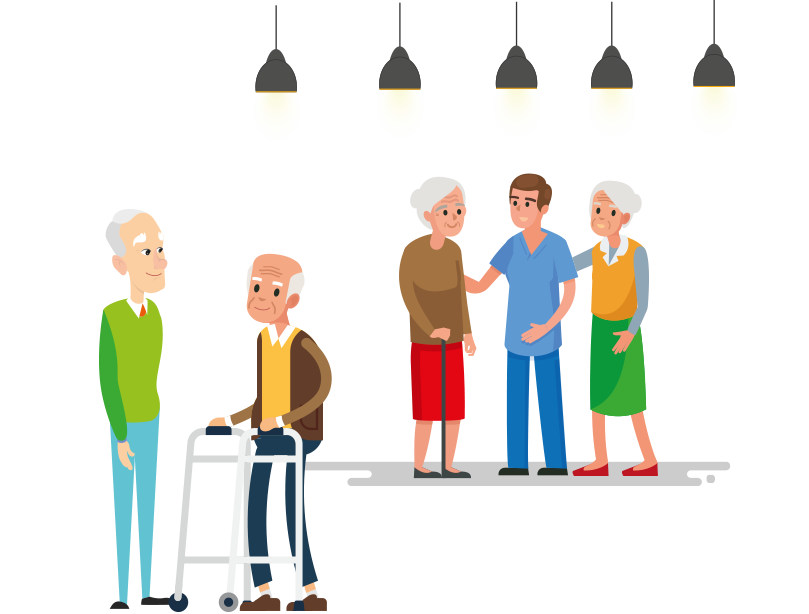
Lighting has a profound impact on the sleep quality of elderly people. Good lighting reduces the need for daytime naps, helping older people feel less stressed and more active throughout the day.
Back at home, Robert unwinds in his lounge chair near the window, where he enjoys reading the newspaper and occasionally glancing outside at the trees and neighbourhood activity. To create a calming atmosphere, he switches on a warm reading light, which perfectly complements his relaxing evening routine.

Because there isn’t always sufficient daylight, sometimes we must mimic it using electric lighting. With the right amount, timing, direction and spectral quality, electric light can have the same positive effect on our circadian rhythm as natural daylight.