1
2
Lighting in communities has been around for many centuries, enabling a variety of beneficial functions; from improving transport and safety to highlighting a city’s architecture and improving the atmosphere of neighbourhoods. However, the extent of artificial light at night has significantly increased in recent decades, leading to challenges such as impacts on biodiversity, energy wastage, and skyglow that hinders the visibility of stars and celestial bodies.
Lighting in communities has also promoted economic development by extending productive hours, facilitating outdoor (leisure) activities and encouraging social interaction during the evening and night. As an example, well-designed road lighting is known to enhance the visual performance and comfort of motorists, keeping drivers alert and contributing to overall traffic safety.
The transition to LED technology has provided lighting manufacturers, designers and end-users with many more tools to optimise the lighting system and mitigate potential adverse effects. Smaller LED sources give optics designers more cost-effective solutions to design precision optics, to more effectively control light distribution. LED light sources can be dimmed more smoothly and to a greater extent than was possible with older technology. Finally, LED technology provides refined spectral tuning options to help mitigate adverse effects of light at night.
State-of-the-art lighting systems, planned, specified, designed and installed by competent professionals, are essential.
The lighting industry is dedicated to fostering a future where Light at Night is used responsibly and sustainably. We believe that by working collaboratively as an industry, we can create lighting solutions that benefit both people and the planet.


The lighting industry is dedicated to fostering a future where Light at Night is used responsibly and sustainably. We believe that by working collaboratively as an industry, we can create lighting solutions that benefit both people and the planet.

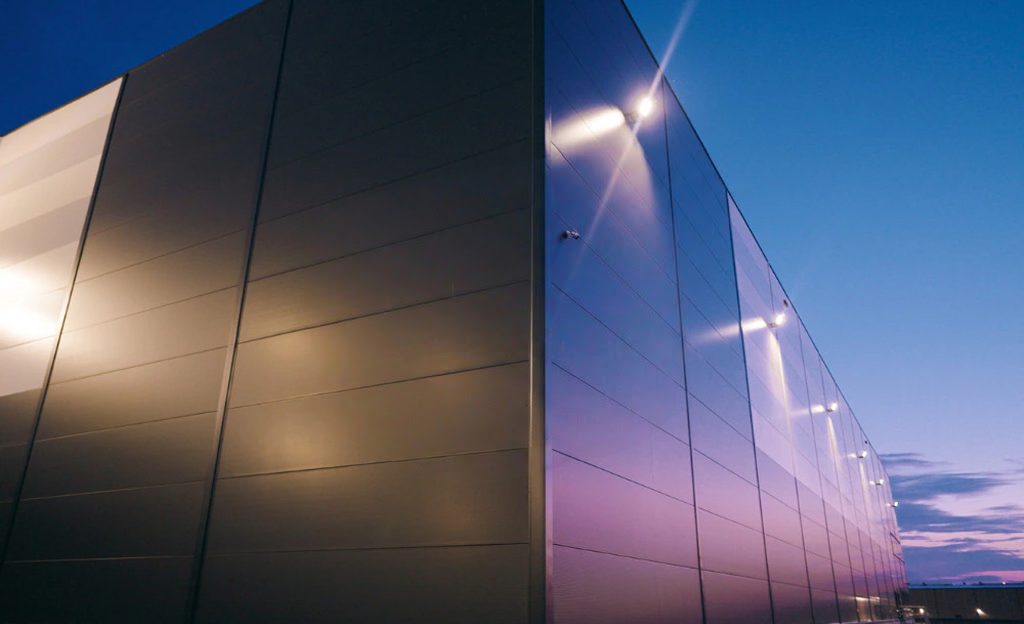
Responsible exterior lighting of warehouse buildings is key to reducing the negative impacts on its surroundings. Improved light distributing luminaires minimise scattered light and provide more control over the illuminated area. The improved optical design reduces the glare effect and minimises obtrusive light effects with neighbouring areas.
By using a state-of-the-art lighting management system, the intensity of the property’s outdoor light at night is reduced to 25% during the period it has only a surveillance function. The LED luminaires reduced installed power by 35% which also contributed to less electricity consumption and CO2 emissions.