1
2
3
4
5
6
Bright, energising lighting with daylight-like qualities at breakfast can help support a quick and alert start to the day. Light coming from multiple directions also contributes to a pleasant and uplifting atmosphere.
The importance of lighting continues after working hours. Following a long day, a transition to warmer light signals the approaching evening. At this time, lighting should be just bright enough to feel comfortable and allow easy movement around the home, while encouraging relaxation.
Adjusting and dimming the background colour of desktop screens can further reduce biological stimulation and support better sleep. Light from a television has a much smaller impact on melatonin production than that of a desktop screen, mainly due to the greater viewing distance and lower screen brightness.
As bedtime approaches, switching to warmer light is recommended to help prepare the body for rest.


Visible light is the most powerful external regulator of our circadian rhythms. In fact, daylight activates specific hormones that give us the energy to start the day. In the winter, when there is limited sunlight, we can use bright white lights to trigger our circadian rhythms.
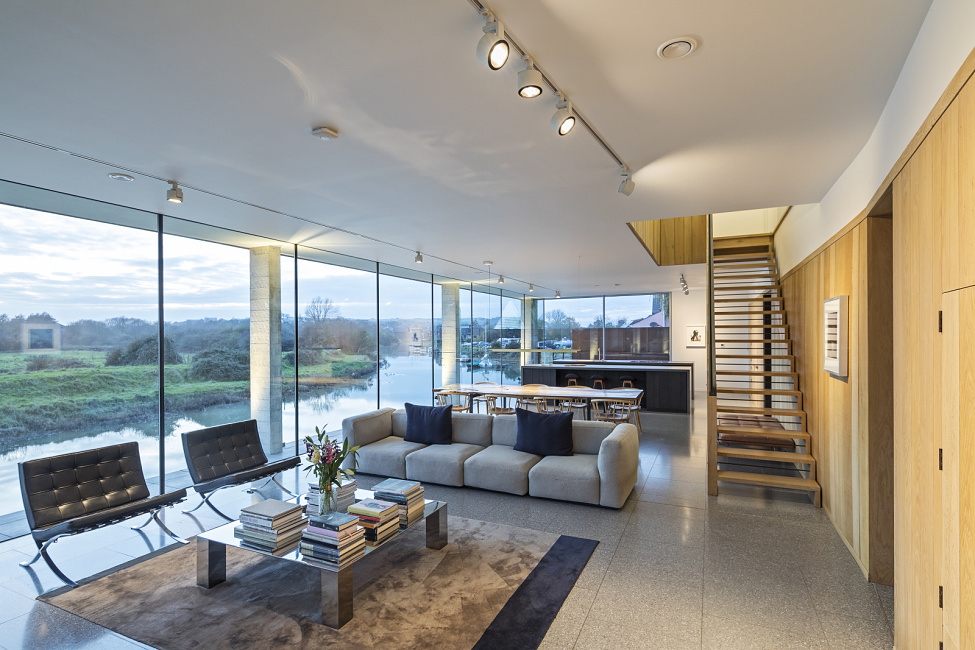
Various zones make the room cosy and spacious.